Photo by Ryan Hutton on Unsplash

How Exposure Impacts Night Time Photography

Picture of Elizabeth Ewen

Elizabeth Ewen

How Exposure Impacts Nighttime Photography

To prepare yourself for Aurora photography, it is critical that you become familiar with how your camera works in the dark under various low light conditions.

Photo by William Bayreuther on Unsplash

Well before you depart for your aurora adventure, take your camera out into the darkness of the nighttime and experiment photographing in a variety of low light situations.

Photo by Ryan Hutton on Unsplash

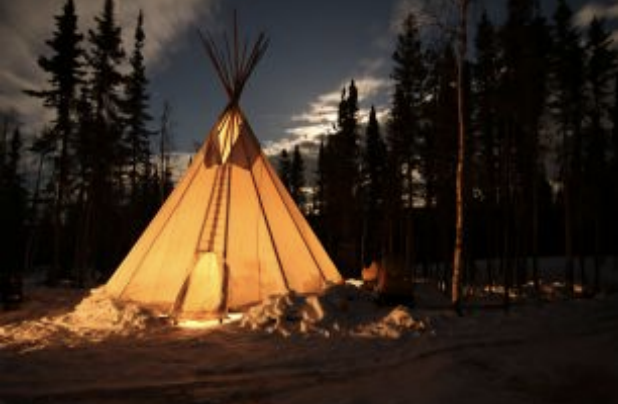
In the examples below, you will see how exposure will impact nighttime photography.  The environment consisted of almost complete darkness, with only the dim glow of a light inside the tent and the glow of a full moon hiding behind the cloud cover.  By only changing the exposure time, and keeping all other factors the same, you can see how exposure time will create a photograph in the darkness that ranges from a very bright photo with lots of background exposure to a darker photo that creates a dark outline of the treeline in the background.

Tipi

30 Second Exposure

Aperture: 2.8

ISO: 800

Focus: Infinity

Camera Setting: Manual

Tripod Used

Camera: EOS Canon Rebel T6i

Lens: Tokina Wide Angle

Light Conditions: Darkness with a light glow from the tent and a full moon behind the clouds.

Tipi

8 Second Exposure

Aperture: 2.8

ISO: 800

Focus: Infinity

Camera Setting: Manual

Tripod Used

Camera: EOS Canon Rebel T6i

Lens: Tokina Wide Angle

Light Conditions: Darkness with a light glow from the tent and a full moon behind the clouds.

Tipi

2 Second Exposure

Aperture: 2.8

ISO: 800

Focus: Infinity

Camera Setting: Manual

Tripod Used

Camera: EOS Canon Rebel T6i

Lens: Tokina Wide Angle

Light Conditions: Darkness with a light glow from the tent and a full moon behind the clouds.

TRY IT YOURSELF!

  1. Find a low light setting 
  2. Set your camera to manual
  3. select 800 ISO 
  4. Fully open your aperture with your focus on infinity

Every camera responds a little different.  I only suggest these settings as a starting point to experiment with exposure.

NEXT...

Once you are set up in the field, take three pictures starting at a 30 second exposure, then an 8 second exposure and finally a 2 second exposure.  Examine your photos and note how the shorter the exposure time, the more darkness appeasers in your subject matter.  Now think a little about how you will want your aurora photo to appear.  Do you want a blueish colour sky with a clear view of background images such as trees?  If so, then you will want to have a longer exposure time.  Or do you want a darker sky that allows the aurora to pop out more with background images a little darker?  Then you may want to go with a shorter exposure.  ISO and Aperture also impacts the brightness of your nighttime photography but let’s become comfortable with exposure time before we look at those other factors. The time you spend experimenting with nighttime photography in advance of your aurora experience will greatly benefit the wonderful results you will capture with your camera once under the aurora.  


For more tips on nighttime photography, following this link below: https://www.roughguides.com/article/night-time-photography-10-tips-for-photographing-after-dark/ 

We have recently added audio to all our blogs thanks to a recommendation.  We appreciate all suggestions!  

Leave a Reply

On Key

Related Posts

Capture travel memories through street photography.

Beyond the Postcard

Beyond landmarks and monuments. When most people travel, they photograph the landmarks. Street photography offers something different. Whether using an iPhone, digital camera, or film

Read More »
Hidden Locations Around Yellowknife

Be inspired by 3 scenic hidden treasures in Yellowknife

If you are looking for scenic locations hidden around Yellowknife, then this blog post is for you. There are plenty of hidden treasures around Yellowknife

Read More »
Cameron Ramparts

A picture is worth a thousand words, with the correct exposure settings

For many years, we have heard this proverb, “A Picture is Worth a Thousand Words,” and to this day, this saying is still accurate. The

Read More »
Northern Lights

How to choose a northern lights camera that fits your needs

The anticipation is building up inside as you dream of your next vacation where you’ll be photographing the spectacular northern lights. As you wait to

Read More »