Finding Your Distance

Finding Your Distance
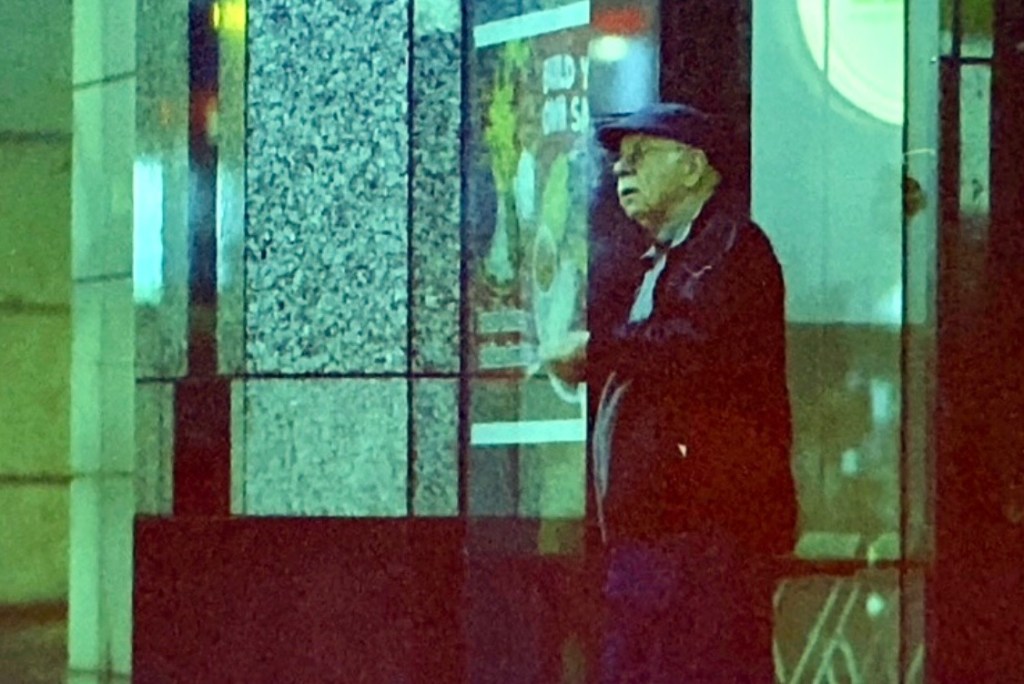
A recent visit to Vancouver brought the expected moments: a stop at the famous Steam Clock in Gastown, a stroll through Stanley Park, breakfast at the Ovaltine Café, and of course the ride up Grouse Mountain. Yet despite all of this, the image of Vancouver that holds the most meaning for me came from a quiet evening walk with my Nikon F100 loaded with Tucson film and paired with a 180mm lens.
I came upon this gentleman standing alone outside a building, lost in reflection during a late evening smoke, separate from the city, yet somehow deeply within it. Without him noticing me off to the side, I raised my camera, took a quick photograph, and quietly moved on.
That single snapshot of a fleeting moment now represents far more to me than any monument or tourist attraction. It captures the rhythm, atmosphere, and in many ways, the romance of the city itself.
Long after returning home, it is rarely the landmarks that return most vividly to my mind as life settles back into routine. Instead, it is these quiet human moments that endure; fragments of atmosphere that speak not just to the infrastructure of a place, but to its people, culture, rhythm, and soul.
That is the sensation I endeavour to capture through street photography.
These intimate moments require conscious decisions about comfort, distance, and restraint; remaining on the edge of a scene without influencing it. They reflect a philosophy that has increasingly become central to my work:
“I photograph from the edges of things, where truth passes by without noticing me.”
To me, this is one of the cornerstones of street photography: witnessing without interference. Allowing candid moments of humanity interacting with an urban environment to reveal themselves naturally.
But this approach also requires finding your comfort zone; understanding the distance from which you see the world honestly. It means respecting the dignity of your subjects while still allowing truth to emerge undisturbed.
In the end, the photographs that remain with us are often not the loudest or most dramatic images, but the ones that preserve a genuine sensation of place; the rhythm, atmosphere, and quiet humanity that leave a lasting impression long after the journey itself has ended.
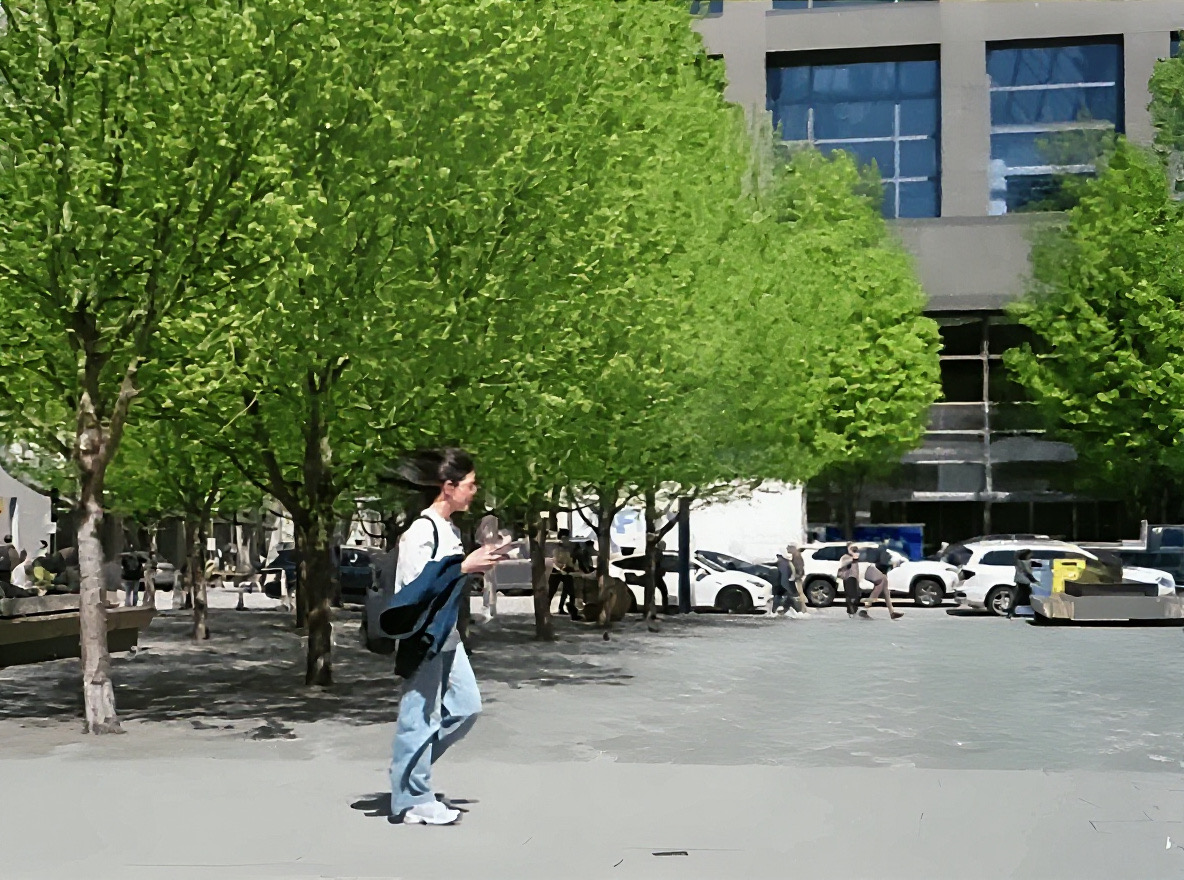

Both of these images were taken on my Nikon FG loaded with Kodak 400 Max and paired with a 50mm lens. Yes, I am something of an analog girl living in a digital world.
When you look at these two photographs, they come from very different places; not just physically, but emotionally.
The first image is safe. It is taken from across the road at a comfortable distance, with little chance of being noticed as the world passes by. There is nothing technically wrong with it. The motion blur from the wind and movement could even lend itself to a beautiful image under the right circumstances.
But the photograph never truly goes anywhere.
It is captured from a distance at nearly ninety degrees to the subject, and the image simply stops at the person who anchors the frame. You remain an observer standing safely outside the moment rather than feeling drawn into it.
There is still value in this kind of photograph. It meets every conventional definition of street photography: an urban setting, a candid moment, a figure moving naturally through the city. Yet for me, it lacks something deeper. It lacks the rhythm, atmosphere, and emotional pull that make a place feel alive.
You are watching the scene, but not truly inside it.
There is very little story beyond a lone figure passing through the frame. The city itself becomes secondary rather than part of the experience. It feels safe, distant, and observational; almost as though you stood close to something meaningful without fully stepping into the space needed to capture its atmosphere.
That distance is not always a flaw. In many ways, it is where most of us begin.
Finding your comfort zone in street photography is not about forcing yourself into confrontation or abandoning your personality for the sake of getting closer. It is about understanding the balance between comfort, respect, observation, and emotional presence.
Sometimes stepping slightly closer; physically or emotionally allows the image to breathe. The city begins interacting with the subject rather than simply surrounding them. The viewer no longer feels like a spectator standing across the street, but instead like someone quietly sharing a moment within the rhythm of the scene itself.
When you look at the second image, it was taken with the same camera, the same film, and the same 50mm lens. The difference is not the equipment, but the relationship to the scene itself.
This time I was on the same side of the street, sitting quietly on a nearby bench and simply observing the world as it moved around me. I watched the young family for a few moments, studied the rhythm of the scene, quietly raised my camera — already zone focused — captured the image, and then moved on without ever leaving the bench.
By avoiding eye contact and allowing my attention to drift naturally after taking the photograph, I avoided drawing attention to myself. In many ways, this approach reflects the philosophy that increasingly shapes my street photography:
“I photograph from the edges of things, where truth passes by without noticing me.”
Within street photography, working from a fixed location like this is sometimes referred to as “fishing,” as opposed to “hunting,” where the photographer constantly moves through the city searching for moments. Both approaches have value, but I often find that sitting quietly and allowing life to unfold around you creates images with greater atmosphere and emotional depth.
There is a great deal happening within this frame that works together harmoniously. The young mother naturally anchors the image, while the gentleman and stroller create secondary points of interest that support and balance the composition. Together, they create a sense of connection, belonging, and quiet humanity that carries the photograph beyond a simple passing moment.
Proximity to the scene also allows the image to breathe differently.
The bench itself becomes a leading line, guiding the viewer naturally through the frame and deeper into the surrounding environment. After first settling on the family, the eye begins wandering into the background activity, creating layers, depth, and a stronger sensation of being physically present within the urban environment.
No photograph is perfect, and every image contains elements that could be improved. Yet when I look at this frame, I feel something far more important than technical perfection. The angle, closeness, layering, and atmosphere work together to create the sensation of being part of a living moment rather than simply observing it from a distance.
To me, this is where street photography becomes meaningful.
These are the moments that remain with us long after returning home, not simply because of what they show, but because of how it felt to stand there within the rhythm of the city itself. In many ways, those fleeting human moments leave a deeper and more lasting impression than landmarks or monuments ever can.
When the Moment Notices You
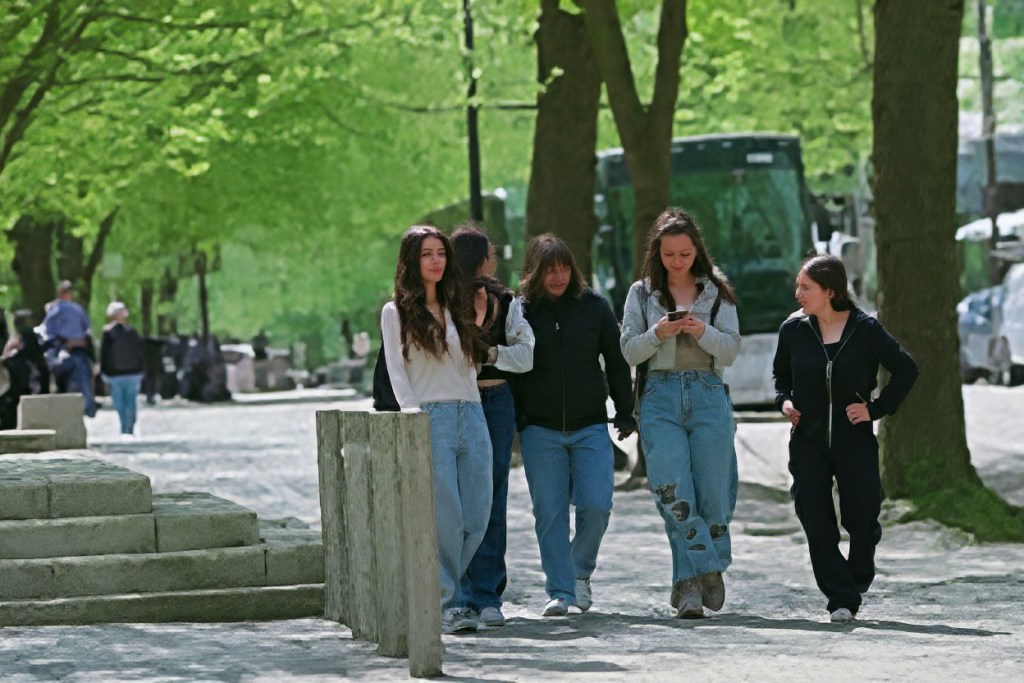
The young lady on the far left looked directly at me immediately after I took this photograph, almost as if to say:
“Did you just take my picture?”
One of the first instincts after capturing an image is to immediately look back toward your subject or check the photograph you just took. In street photography, that reaction can often draw unnecessary attention to yourself and disrupt the natural flow of the moment.
After taking this image, I briefly looked in their direction but allowed my attention to drift naturally past them, as though my focus was actually somewhere farther down the street. I then shifted my position slightly and pretended to frame another scene nearby, almost as though I had simply been photographing the general atmosphere around them rather than the group itself.
The goal is not deception so much as remaining unobtrusive and allowing the rhythm of the street to continue uninterrupted.
Eventually, however, every street photographer encounters a moment where someone asks if their photograph was taken, or why they were being photographed. When that happens, I believe honesty and respect matter far more than technical skill.
For that reason, I carry a simple business card identifying myself as a street photographer, along with links to my Flickr and Instagram accounts through a QR code on the back. If someone asks, I explain what drew me to the image and why I found the moment meaningful. I also offer to share the photograph with them if they would like a copy.
And if someone is genuinely uncomfortable, I believe respect should come first. While photography in public spaces is generally legal in Canada, street photography still carries a responsibility toward the dignity of the people within the frame.
Be respectful. Be kind. Then quietly move on and allow the city to keep breathing around you.

Narrowing the Gap
At times, bringing yourself physically closer to a subject is not always practical or comfortable, particularly during late evenings when there are fewer people around and you naturally stand out more within the scene.
In situations like this, I often rely on longer focal lengths. This is where lenses such as the 85mm f/1.4 truly shine, allowing faster shutter speeds under dim evening light while still maintaining a sense of intimacy within the image.
For this particular photograph, however, I used something far less conventional for street photography; a 180mm lens mounted on my Nikon F100.
The longer focal length allowed me to remain physically distant while still emotionally connected to the moment unfolding in front of me. It creates a certain comfort, allowing you to enter the atmosphere of the scene without heavily disturbing it.
Like everything in photography, however, there is always compromise. Longer lenses compress space and alter the relationship between subject and environment, yet that tradeoff can sometimes help preserve the quiet honesty of a fleeting moment.
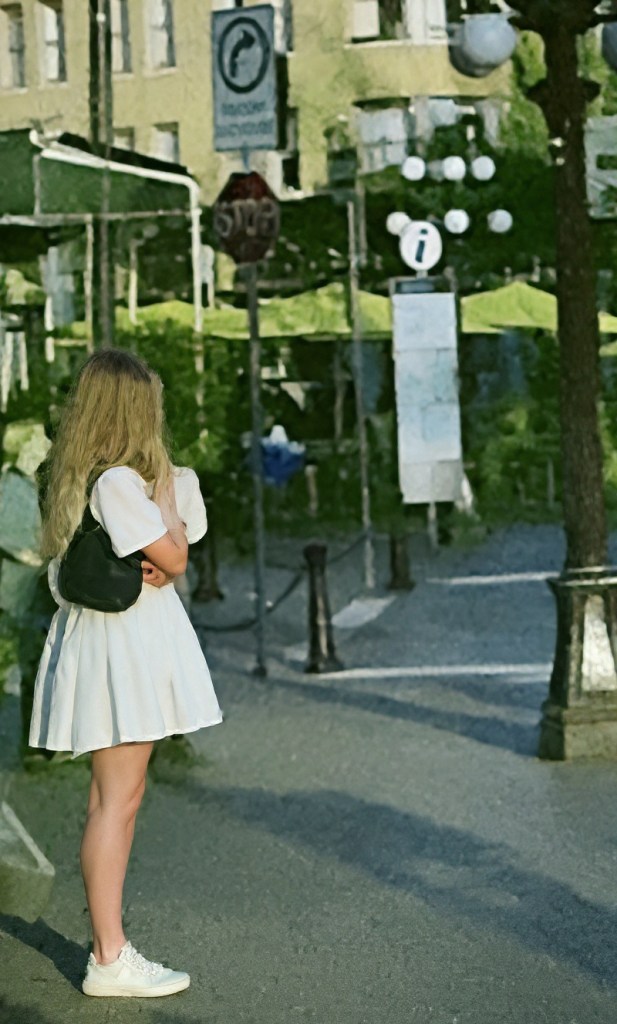
Waiting at the edge of the moment where the rhythm of the city quietly reveals itself.
Finding your distance in street photography is ultimately about more than focal lengths or remaining unnoticed. It is about discovering the place where you can quietly observe life without disturbing it, while still allowing yourself to become emotionally connected to the atmosphere unfolding around you.
Long after a journey ends, it is often not the landmarks or tourist attractions that remain strongest in memory, but the fleeting human moments woven between them: the quiet pauses, the movement of strangers through evening light, the sound and rhythm of a city breathing around you.
Street photography, at least for me, is an attempt to bring a small part of that atmosphere home.
Not simply an image of where I travelled, but a reminder of how it felt to stand there within the rhythm of that place for a brief moment in time.

Find the distance where the city still breathes naturally around you.
By Elizabeth Ewen, CEO Raven Tours Ltd.
“I photograph from the edge of things, where truth passes by without noticing me.”